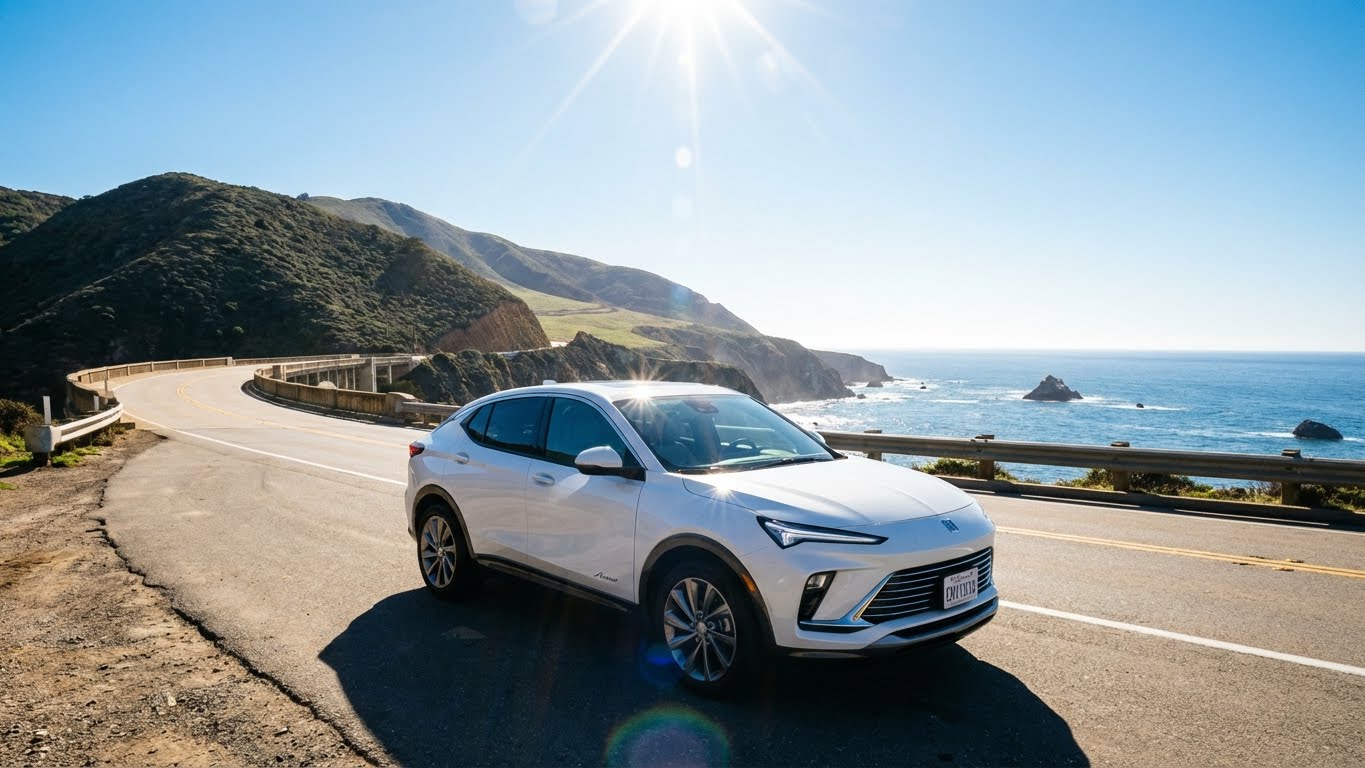
In an automotive landscape increasingly dominated by spiraling prices and oversized SUVs, the Buick Envista has emerged as a disruptive force. Since its debut, it has successfully challenged the binary choice between “affordable but boring” and “stylish but expensive.” Entering the 2026 model year, General Motors has not rested on the success of the vehicle’s launch. Instead, they have refined the Envista’s value proposition through strategic feature standardization and aesthetic sharpening.
The 2026 Buick Envista is more than just a crossover; it is a statement piece that democratizes the “coupe SUV” silhouette—a design language previously gated behind the six-figure price tags of European luxury marques. By combining the sleek roofline of a fastback with the practicality of a modern crossover, Buick has created a vehicle that appeals to a demographic historically elusive to the brand: young, style-conscious urban professionals.
This comprehensive guide analyzes every aspect of the 2026 Buick Envista, from its VSS-F platform engineering and “QuietTuning” acoustic technology to the new Studio Series package, helping prospective buyers understand why this sub-$30,000 vehicle is punching far above its weight class.

Contents
1. What’s New for 2026: Refining the Formula
While the 2024 launch introduced the vehicle and the 2025 model year was largely transitional, the 2026 Envista brings targeted updates that directly address consumer feedback and market trends.
The “Studio Series” Aesthetic Package
The headline for 2026 is the introduction of the Studio Series, an exclusive styling package available on the Sport Touring (ST) trim. In an era where “blackout” packages are ubiquitous, the Studio Series offers a more nuanced, architectural approach to automotive fashion.
- Visual Identity: The package is anchored by a new Ceramic exterior paint—a flat, non-metallic grey-white hue that mimics the finish of high-end pottery or modern consumer electronics. This is paired with a contrasting black roof, black mirrors, and 19-inch high-gloss black wheels, creating a striking two-tone effect that visually lowers the car’s profile.
- Interior Sophistication: Inside, the Studio Series abandons the standard ST’s “Santorini Blue” accents in favor of Whisper Beige stitching on Ebony seats. This change significantly elevates the cabin’s atmosphere, moving it from “sporty” to “mature luxury.”
Standardization of Convenience
Perhaps the most impactful change for the average buyer is the democratization of premium features.
- Remote Start: Previously a paid option or reserved for higher trims, Remote Start is now standard on the base Preferred trim. For buyers in cold climates, this transforms the daily usability of the entry-level model.
- Rear Park Assist: Given the Envista’s coupe-like rear window, rear visibility is inherently compromised. Recognizing this, Buick has made Rear Park Assist standard across the board, mitigating the primary functional drawback of the vehicle’s design.
Color Palette Shift
The 2026 color options signal a shift in target demographics. The retirement of Cinnabar Metallic (a deep, brownish-red) and the introduction of Brilliant Red suggests Buick is catering to a younger, more energetic buyer who prefers bold primary colors over traditional “luxury” earth tones.

2. Design and Aerodynamics: The Art of the Silhouette
The Buick Envista is undeniably a design-led product. Its existence is owed to the Wildcat EV Concept, a show car that established Buick’s new face: the forward-leaning “shark nose” front end and the winged LED checkmark lighting.
The “Crossover Coupe” Paradox
Traditionally, the “SUV Coupe” body style (popularized by the BMW X6) was criticized for sacrificing utility for vanity. However, on the Envista, this shape serves a dual purpose: aesthetic differentiation and aerodynamic efficiency.
- Visual Value: The sloping roofline creates the illusion of length and expense. To the casual observer, the Envista looks like a vehicle costing $50,000, not $26,000.
- Aerodynamic Function: The sleek profile contributes to a lower drag coefficient than boxy competitors like the Jeep Renegade or Kia Seltos. This aerodynamic efficiency helps the small engine maintain highway speeds without excessive fuel consumption.
The Rear Wiper Controversy
A persistent point of discussion is the lack of a rear windshield wiper. Buick engineers argue that the steep angle of the rear glass and the aerodynamic airflow over the roof spoiler naturally clear water from the window. In practice, this holds true at highway speeds (above 50 mph). However, city drivers may find that morning dew or grime accumulates, making the standard Rear Vision Camera and the newly standard Rear Park Assist essential tools for maneuvering.

3. Engineering and Powertrain: Efficiency over Velocity
Under the hood, the 2026 Envista continues to utilize a single powertrain configuration. While some enthusiasts clamor for more power, a deep dive into the engineering reveals why GM stuck with this setup.
The 1.2-Liter Turbocharged Engine (LIH)
- Configuration: 1.2L Inline-3 Cylinder Turbo.
- Output: 137 Horsepower @ 5000 RPM.
- Torque: 162 lb-ft @ 2500 RPM.
Why Three Cylinders? The move to three cylinders is driven by thermal efficiency. Fewer cylinders mean less surface area for heat loss and less internal friction from moving parts. The engine is also lighter, which improves the vehicle’s front-to-rear weight distribution. To combat the natural vibration of an odd-cylinder engine, GM utilizes a specialized balance shaft and fluid-filled engine mounts, ensuring that the cabin remains isolated from the engine’s “thrum.”
The Turbo Advantage: While 137 horsepower sounds modest, the 162 lb-ft of torque is the critical number. Because it is turbocharged, this peak torque is available low in the rev range (from just 2500 RPM). This gives the Envista a “peppy” feel in stop-and-go city traffic (0-30 mph), where most daily driving occurs. It feels faster than the numbers suggest until you attempt a high-speed pass on the freeway.
Transmission: 6-Speed Auto vs. CVT
In a segment plagued by droning Continuously Variable Transmissions (CVTs), the Envista’s 6-speed automatic transmission is a major competitive advantage.
- Driving Feel: The 6-speed auto provides distinct shift points. When you accelerate, the engine revs climb and drop naturally, avoiding the “rubber band” sensation of a CVT where the engine holds a high, noisy RPM while the car slowly catches up. This transmission contributes significantly to the Envista’s “premium” driving character.

4. Chassis Dynamics: The Watts Link Difference
One of the most technically interesting aspects of the Envista is its rear suspension, which varies depending on the trim level.
Standard Suspension (Preferred Trim)
The base model uses a Compound Crank (Torsion Beam) rear suspension. This is a simple, durable, and space-efficient setup common in economy cars. It is perfectly adequate for smooth roads but can feel “jittery” if one rear wheel hits a bump while cornering, as the beam transfers some movement to the opposite wheel.
The Watts Link System (Avenir & 19-inch Wheel Models)
The Avenir trim and Sport Touring models equipped with 19-inch wheels (including the Studio Series) feature a Watts Link rear suspension. This is a rare feature in the subcompact class.
- How it Works: The Watts Link adds a mechanical pivot point and two lateral rods to the rear axle. This mechanism physically prevents the rear axle from moving side-to-side (lateral movement) while allowing it to move freely up and down.
- The Benefit: By locking the axle laterally, the suspension absorbs bumps strictly vertically. This eliminates the “tail wag” sensation over mid-corner bumps and makes the car feel significantly more planted and stable at highway speeds. It is a key factor in why the Avenir trim rides like a larger, more expensive vehicle.

5. Interior and Technology: The “Virtual Cockpit”
General Motors has aggressively updated its interior architecture, and the Envista benefits from the “Virtual Cockpit” design language originally developed for Cadillac.
Displays and Interface
The dashboard is dominated by 19 inches of total screen real estate, housed under a single continuous glass panel.
- 8-inch Digital Driver Center: Replaces traditional analog gauges. It is reconfigurable, allowing drivers to prioritize speed, fuel economy, or media information.
- 11-inch Infotainment Touchscreen: This acts as the command center. It runs a modern, responsive interface that supports Wireless Apple CarPlay and Android Auto as standard equipment. The lack of cables keeps the cabin clutter-free.
QuietTuning™ Technology
Buick’s signature “QuietTuning” is not just marketing fluff; it is a holistic engineering approach to noise reduction.
- Active Noise Cancellation (ANC): Microphones in the cabin detect engine frequencies and the audio system broadcasts an opposing frequency to cancel them out.
- Physical Insulation: The Envista uses triple door seals, acoustic laminated windshield glass, and dense sound-deadening mats in the firewall and floor.
- Result: Independent tests have shown the Envista to be quieter at 70 mph than competitors like the Honda HR-V or Toyota Corolla Cross, reducing driver fatigue on long journeys.
Cargo and Space
- Passenger Space: The Envista offers a class-leading 38.7 inches of rear legroom, nearly matching mid-size sedans.
- Cargo Compromise: The fastback roof does cut into cargo height. While the floor area is generous, you cannot stack tall boxes as easily as in a Chevy Trax. Max cargo volume is 42.0 cubic feet with seats folded—sufficient for a week’s groceries or luggage for two, but tight for moving furniture.

6. 2026 Trim Level Analysis and Pricing
Understanding the trim ladder is essential for finding the best value.
Buick Envista Preferred (Starting MSRP ~$26,495)
- The Verdict: The “Smart Choice.”
- In 2024, the Preferred trim felt basic. For 2026, the addition of Remote Start and Rear Park Assist makes it a complete package. You get the same engine, same screens, and same stunning exterior shape as the Avenir. The cloth/leatherette seats are durable and comfortable. The 17-inch wheels offer the tallest tire sidewall, providing the softest ride over potholes.
Buick Envista Sport Touring (Starting MSRP ~$27,995)
- The Verdict: The “Style Choice.”
- This is the volume seller. It swaps chrome for gloss black and adds 18-inch black wheels. It opens access to the Studio Series package ($1,000+ est.), which is the only way to get the Ceramic paint and Whisper Beige interior. If you want your car to turn heads at a stoplight, this is the trim.
Buick Envista Avenir (Starting MSRP ~$31,295)
- The Verdict: The “Downsized Luxury” Choice.
- The Avenir justifies its price with the Watts Link suspension, power liftgate, quilted leather seats, and body-color plastic cladding (which looks much more upscale than the black plastic on lower trims). It is designed for empty nesters downsizing from larger luxury cars who refuse to compromise on feature content.

7. Comparative Analysis: Envista vs. The Field
vs. Chevrolet Trax
The Trax and Envista are platform siblings built in the same South Korean factory.
- Buy the Trax if: You need maximum cargo space (it’s boxier) and want to save ~$2,000.
- Buy the Envista if: You want a quieter highway ride, heated seats (more widely available), and a car that doesn’t look like a budget rental. The Envista feels like a distinct step up in refinement.
vs. Mazda CX-30
- Buy the Mazda if: You need AWD (standard on Mazda, unavailable on Buick) or crave horsepower (191 hp vs 137 hp). The Mazda is a driver’s car.
- Buy the Envista if: You frequently carry rear passengers. The Mazda’s rear seat is claustrophobic; the Envista’s is limousine-like by comparison. The Envista also offers better real-world fuel economy.
vs. Honda HR-V
- Buy the Honda if: You prioritize resale value and proven long-term reliability above all else.
- Buy the Envista if: You find the HR-V’s CVT transmission noisy and its acceleration sluggish. The Envista’s turbo torque makes it feel punchier in city driving, and its infotainment tech is generations ahead of the base Honda interface.

8. Ownership and Long-Term Value
Fuel Economy
- EPA Ratings: 28 City / 32 Highway / 30 Combined.
- Real World: Owners and testers frequently report 34-36 MPG on highway loops, beating EPA estimates. The aerodynamic shape truly pays off at speed.
Reliability Outlook
The 1.2L Turbo (LIH) engine has been in production for several years (previously in the Trailblazer and Encore GX). Early issues with software have largely been resolved. The 6-speed transmission is a mature, robust design known for longevity compared to the complex belt-driven CVTs of competitors.
Depreciation
Coupe-SUVs tend to hold value well due to their desirability among younger used-car buyers. While it won’t match a Toyota, the Envista is expected to retain value better than previous sedans like the Buick Regal.

9. Conclusion: Is the 2026 Buick Envista Right for You?
The 2026 Buick Envista is a triumph of focused product planning. General Motors identified exactly what the modern entry-level buyer wants: style, connectivity, and comfort. They prioritized these attributes over raw horsepower and off-road ruggedness.
If you live in an area with heavy snowfall and absolutely require All-Wheel Drive, the Envista is not for you—look at the Buick Encore GX or Mazda CX-30. If you need to haul washing machines or large dogs, the sloping roofline will frustrate you.
However, for the 90% of drivers who commute in urban and suburban environments, the 2026 Envista is arguably the best value on the market. It offers the visual presence of a luxury car, the acoustic refinement of a premium sedan, and the fuel economy of a compact hatch. With the 2026 updates making the base trim more livable and the Sport Touring more stylish, the Envista remains the undisputed king of the “Premium Entry” segment.

Jordan is a seasoned automotive journalist with over 15 years of experience covering the automotive industry. With a deep passion for cars and a keen eye for industry trends, Jordan founded AutoTopPro to create a community for like-minded car enthusiasts. Under his leadership, AutoTopPro has grown into a trusted source for automotive news and reviews.